
Is a Broken Nail Worth a Trip to the Emergency Vet?
A pet’s broken nail is worth a veterinary visit when there is active bleeding that does not stop within 10 to 15 minutes, when the nail has been torn down to or through the quick, or when signs of infection or significant pain are present and in some cases, what looks like a minor nail break can turn into a more serious problem if left untreated overnight. At Glenkirk Animal Hospital in Gainesville, VA, we see broken nail injuries regularly, and we want pet owners to know what to watch for so they can make the right call.
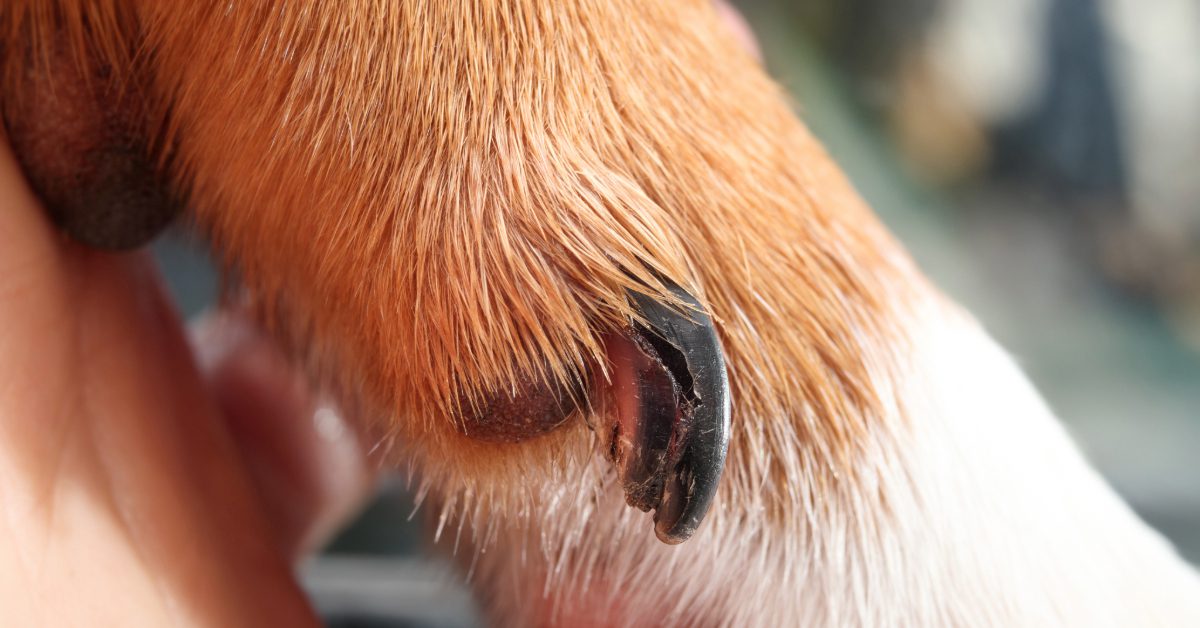
A broken or torn nail might sound trivial compared to other pet injuries, but the nail on your dog or cat’s paw is attached to the last bone of the toe, called the distal phalanx, and damage that extends deep into the nail structure can involve bone, create a pathway for infection, and cause real, lasting pain.
How Can I Tell if a Broken Nail Is Bleeding Too Much to Handle at Home?
The quick, which is the soft tissue inside the nail that contains blood vessels and nerve endings, bleeds when torn. If your pet’s broken nail is bleeding, the first thing to do is apply steady, gentle direct pressure with a clean cloth or gauze. In most cases, healthy pets with normal clotting ability will stop bleeding within 10 to 15 minutes with consistent pressure.
Signs the Bleeding Requires Veterinary Care
You should seek veterinary attention for a pet’s broken nail with bleeding if:
- Bleeding has not slowed or stopped after 15 minutes of consistent pressure
- Blood is soaking through the cloth rather than simply staining it
- Your pet is excessively licking or chewing at the nail, preventing clotting
- Your pet has a known clotting disorder, is on blood thinners, or has had previous bleeding concerns
Styptic powder can help control minor nail bleeding in a cooperative pet, but if the nail is fractured at or near the base, the injury may be more extensive than a surface tear, and a veterinarian should evaluate it.
What Are the Risks of Leaving a Torn Nail Untreated Overnight?
A partially torn pet’s broken nail is a specific concern because it acts as a wedge with every step your pet takes, the dangling or partially detached nail levers against the nail bed, causing ongoing pain and repeatedly traumatizing the tissue. This dramatically increases the risk of infection and makes healing more difficult.
Leaving a severely torn nail untreated overnight also exposes the sensitive nail bed to dirt, bacteria, and moisture from the ground. The nail bed tissue is highly vascularized and has direct contact with the bone below. A bacterial infection at this site can progress quickly, and in worst-case scenarios, it can develop into osteomyelitis, a bone infection that requires far more aggressive treatment than a simple nail repair.
The Risk of Your Pet Chewing the Nail
Most pets will attempt to lick or chew at a painful torn nail. While some licking is instinctive and normal, excessive oral contact introduces oral bacteria into an already compromised wound. If your pet will not leave the nail alone overnight, an e-collar (cone) is essential, and same-day or next-morning veterinary care is strongly recommended.
How Do I Apply a Temporary Pressure Bandage to a Bleeding Paw?
If your pet’s broken nail is bleeding and you need to apply a temporary bandage while you wait to see a veterinarian, follow these steps. First, fold several layers of clean gauze into a pad and hold it firmly over the bleeding nail. Apply gentle but steady pressure and hold for at least 10 minutes without lifting to check as lifting too early can disrupt the clot.
If the gauze soaks through, do not remove it. Add more gauze on top and continue pressure. Once bleeding has slowed, loosely wrap the paw with rolled gauze to hold the pad in place, then cover with a clean sock or light self-adhesive bandage. Do not wrap too tightly. You should be able to slip a finger under the wrap. A bandage that cuts off circulation causes more harm than the original injury.
This temporary bandage is not a substitute for veterinary evaluation. Bring your pet to Glenkirk Animal Hospital so the nail can be properly assessed, trimmed, and treated to prevent infection and further injury.
When Does a Simple Nail Break Turn Into a Serious Bone Infection?
A pet’s broken nail becomes a gateway to serious complications when the nail bed is exposed and contaminated with bacteria over time. The progression from a torn nail to bone infection (osteomyelitis) is not common, but it is a real risk, particularly when injuries are left untreated, when the pet is immunocompromised, or when the break extends down to the level of the bone.
Signs that an untreated or under-treated broken nail may be developing into a deeper infection include:
- Persistent or worsening lameness more than 24 to 48 hours after injury
- Swelling, warmth, or redness extending above the nail and up the toe
- Discharge, especially thick, discolored, or foul-smelling, from the nail bed
- Fever, lethargy, or loss of appetite alongside the nail injury
If any of these signs develop, do not wait. Contact Glenkirk Animal Hospital promptly. A bone infection requires antibiotics, and in some cases, surgical intervention. Catching the problem early is critical.
What to Expect at the Vet for a Broken Nail
A veterinary visit for a pet’s broken nail typically involves cleaning and examining the injury, removing any portion of the nail that is torn, damaged, or creating leverage on the nail bed, and prescribing treatments to prevent infection and manage pain. Most nail repairs are straightforward outpatient procedures, though some pets require sedation for a thorough and comfortable treatment.
After the repair, your vet will advise you on bandage care, activity restrictions, and follow-up. Our team at Glenkirk Animal Hospital in Gainesville is experienced with these injuries and will make sure your pet is comfortable and on the road to full recovery before you leave. If you have any questions or concerns about your pet’s broken nail, call us today at (571) 248-2470.
Recent Posts
About Us
At Glenkirk Animal Hospital in Gainesville, VA, we make veterinary care more accessible with seven-day availability, extended hours, and same-day appointments when available. We offer straightforward communication, transparent pricing, and on-site diagnostics to help pets get timely care.